Posted in Budget Friendly, Healthy Eating

Healthy Eating: Benefits of Pesto

Pesto is a sauce traditionally made of basil, pine nuts, olive oil and Parmesan in Italian cuisine. The word pesto means “pounded” in the Italian language, which refers to the culinary way to prepare it with a mortar and pestle. You pound the ingredients into a fragrant, savory mixture perfect for coating long pasta noodles. Most people like use a food processor instead to make pesto, which makes a quick healthy meal that delivers rich nutritional value and unforgettable flavor.
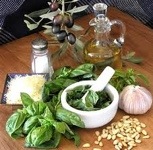
20120705-134844.jpg

Vitamins: The garlic and basil leaves in pesto contain vitamins A and C. The vitamin A content in a serving of pesto is 560 IU, or 11 percent of the Food and Drug Administration daily value. The vitamin C content is 5 mg, or 8 percent of the 60 mg FDA daily value. Vitamin A is important for skin and eye health and vitamin C is important for supporting the immune system and generating collagen for skin repair.

Minerals: The minerals found in notable amounts in pesto include potassium and phosphorus. The potassium content is about 60 mg, which is 2 percent of the 3,500 mg FDA daily value. The phosphorus content is 30 mg, or 3 percent of the 1,000 mg FDA daily value. Potassium regulates the heartbeat and phosphorus forms bone and teeth composition.

Oil and Phytochemicals: Olive oil provides omega-3 fatty acids, which protect the cardiovascular system against disease. Among the many phytochemicals pesto ingredients contain, allicin is a compound in garlic that improves blood pressure by preventing blood lipids from sticking together. Basil contains antioxidants, which protect healthy cells from toxins that cause disease, and pine nuts contain healthy fats important for nervous system support.

References:
***USDA: Nutrient Data Laboratory: Nuts, Pine Nuts, Dried; Basil, Fresh; Garlic, Raw***
***”The New Food Lover’s Companion”; Sharon Tyler Herbst, et al.; 2007***

Make Your Own Pesto
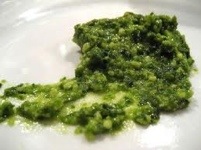
20120705-135051.jpg

Makes 1 cup

INGREDIENTS
2 cups fresh basil leaves, packed
1/2 cup freshly grated Parmesan-Reggiano or Romano cheese
1/2 cup extra virgin olive oil
1/3 cup pine nuts or walnuts
3 medium sized garlic cloves, minced
Salt and freshly ground black pepper to taste

DIRECTIONS
Combine the basil in with the pine nuts, pulse a few times in a food processor. Add the garlic, pulse in food processor a few times more.

Slowly add the olive oil in a constant stream while the food processor is on. Stop to scrape down the sides of the food processor with a rubber spatula. Add the grated cheese and pulse again until blended. Add a pinch of salt and freshly ground black pepper to taste.

Serve with pasta, or over baked potatoes, or spread over toasted baguette slices right away or you can freeze it.

HOW TO FREEZE PESTO

20120705-134717.jpg

If you’re planning on freezing some or all of the pesto you make, you’ll need an ice cube tray or two. I also like to have some olive oil in a condiment squirt bottle for drizzling out small amounts, but you can also pour from the original olive oil bottle or use a spoon.

It’s helpful to know how much each of the ice cube compartments holds, so that you can easily remove the needed amount from the freezer later on. To figure this out, use a measuring spoon and add water to one of the ice cube compartments in your trays to determine how much each cube and tray will hold. My ice cube compartments each holds approx. 2 tablespoons.

Use a spoon to fill the compartments of the tray with pesto.

Use a squirt bottle or spoon to drizzle a light layer of olive oil over the top of each cube compartment. This will keep the pesto from getting dark from contact with the air.

Cover the tray with plastic wrap. Gently tap the plastic down on top of each cube section so it keeps out as much air as possible. Put the tray in the freezer for several hours or overnight so that the cubes freeze completely.

Label quart size plastic freezer bags. I like to put the quantity of each pesto cube on the label (1 cube = 2 tablespoons), in case this old brain of mine forgets that detail when it’s time to use the frozen pesto later.

Once the pesto is frozen solid, remove the trays from the freezer.

I flip the ice cube tray over and put it under the the faucet to trickle some cold water on the bottom of the tray for a few seconds–hold your hand underneath the tray so the cubes don’t fall into the sink. The pesto cubes pop right out.

Fill the plastic bag with frozen pesto cubes and return it to the freezer.

The next time you want to add some quick flavor to pasta, or meat, or salad you’ve got it in your freezer. Very yummy!
Posted in - Poultry, Budget Friendly

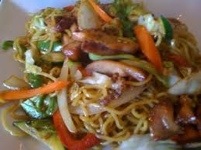
Budget Friendly Bits: Chicken Yakisoba

Under $10: Chicken Yakisoba

20120705-162249.jpg

Adapted from Mark Bittman’s recipe

Servings 6

Total Recipe Cost: $5.63
Cost Per Serving: $0.94

Prep time: 15 min. Cook time: 15 min. Total: 30 min.

1/2 head green cabbage – cost $0.41
1 medium yellow onion – cost $0.55
2 medium carrots – cost $0.25
1 small crown broccoli – cost $0.70
2 inches fresh ginger – cost $0.52
1 large chicken breast – cost $1.66
2 Tbsp vegetable oil – cost $0.08
2 (3 oz.) packages ramen noodles seasoning [seasoning packets discarded] – cost $0.50
1 tsp . sesame oil (optional) – cost $0.19
1/4 cup soy sauce – cost $0.24
1/4 cup worcestershire sauce – cost $0.20
2 Tbsp ketchup – cost $0.05
(up to) 1 Tbsp sriracha hot sauce – cost $0.26
1 Tbsp sugar – cost $0.02
Optional – add green and red peppers 1/2 of each

Prep Day: Prepare the meat and vegetables for stir frying. Peel the ginger and then grate it with a cheese grater. Peel and grate the carrots with a large holed cheese grater. Remove the core from the cabbage and cut into thin strips. Slice the onion into thin strips. Cut the broccoli into bite-sized pieces. Slice the chicken into thin strips.

Boil water in a medium pot for the noodles. Make sure the pot is full of water. Heat the vegetable oil in a large skillet over medium-high heat. When the oil is hot, add the grated ginger, saute for about 30 seconds to one minute. It’s okay if it sticks to the pan but don’t let it burn. Add the chicken strips and cook until they are no longer pink. That will be about five minutes.

Once the chicken is cooked through, add all of the vegetables. Stir and cook until wilted, about 5-10 minutes. Meanwhile, once the water boils, add the noodles and cook just until tender, 2-3 minutes. Drain, return to the pot with the heat turned off and toss with the sesame oil to keep from sticking.

In a small bowl, combine the soy sauce, worcestershire sauce, ketchup, sriracha, and sugar. Use only 1/2 tsp of sriracha if you don’t want it spicy, use up to 1 T. if you like it hot. Stir until the ketchup and sugar are dissolved. Pour the sauce into the skillet with the chicken and vegetables with the heat still on medium high. Add the noodles, stir to coat everything in the sauce, and heat through. It will just take a few minutes.

Once cool place in freezer bag and freeze.

Serve Day: Thaw. Place in a microwaveable dish and heat through.

Posted in - Pork, - Poultry, Budget Friendly

Budget Friendly Bits: Pepperoni Stuffed Chicken

Under $10 Pepperoni Stuffed Chicken

20120630-143021.jpg

Servings Per Recipe: 10

Prep time: 15 min. Cook time: 30 min. Total: 45 min.

Cost per serving: $.90
Total Recipe cost: $8.95

5 boneless (approx. 5), skinless chicken breasts – cost $3.99
8 oz.mozzarella cheese – cost $2.29
1.5 oz. (approx. 24 slices) pepperoni – cost $0.95
2 large egg – cost free since I have backyard laying hens
1 1/4 cup all purpose flour – cost $.66
1 1/4 cup bread crumbs – cost $.77
1 cup vegetable oil – cost $1.45
to taste salt and pepper – cost $0.15

Prep Day: Trim the chicken breasts of any large clumps of fat that may be still attached. Slice each breast in half diagonally to create two diamond-like shaped pieces. Using a small, sharp knife, cut a pocket into the side of each breast piece. This can be slightly tricky on thinner pieces so be careful. Be sure not to cut all the way through the meat but rather just into one side so that the fillings will stay in. Stuff each piece of chicken with 1/2 oz. of cheese and about 4 slices of pepperoni. Lightly season each piece with salt and pepper. Set the stuffed chicken aside. Place in freezer bag. Keep eggs in fridge until serve day. Bag up bread crumbs and put in freezer bag with chicken. Freeze.

Serve Day: Thaw. Preheat your oven to 350 F degrees and line a baking sheet with aluminum foil. Place flour in a shallow dish, set aside. Beat eggs in a different shallow dish, set aside. Place bread crumbs in another shallow dish, set aside.

One by one, coat each piece of chicken in the flour, then the egg then the bread crumbs. Use your hands so that you can keep the open side of the pocket pinched closed and keep the fillings in. The flour helps the egg stick and the egg keeps the bread crumbs in place.

Begin to heat a large skillet with vegetable oil over medium/high heat. Test the oil in the skillet to see if it is hot enough by dropping a small pinch of bread crumbs in. The bread crumbs should sizzle. It is very important that the oil is hot enough or else the breading will soak up a lot of oil and you’ll end up with some really greasy chicken! Place 5 pieces of chicken at a time in the skillet and cook until it is golden brown and crispy on each side. This should take 2-3 minutes.

When you remove the chicken pieces from the skillet, transfer them to the baking sheet and place it in the oven. Finish baking the chicken for about 25 minutes (longer if you have larger pieces). Remove from the oven; check to make sure the chicken is cooked through and serve immediately!