Posted in Healthy Eating

Wellness Wednesdays: How to Read Nutrition Food Labels

How to Read Nutrition Food Labels

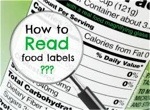
Understanding food labels can help you make wise choice, if you know what to look for. Here’s a rundown of the most important elements.
20130516-132747.jpg

Serving Size – This number is at the top for a reason: The nutritional information on the rest of the label applies to one serving. The FDA sets serving sizes for all foods―they are measurements, not recommendations. Total calories are calculated per serving, as are total calories from fat, so be sure to look at the servings per container. A bag of potato chips might say it has 150 calories per serving, but the entire bag might be three servings, or 450 calories.

Percent of Daily Value – This is calculated for a moderately active woman, or a fairly sedentary man, who eats 2,000 calories a day. (Highly active women, moderately active men, and growing teen boys may need closer to 2,500 calories a day.) A serving of Cheerios with ½ cup of skim milk gives the average adult just 3 percent of the daily value of fat intake and 11 percent of the daily value of fiber intake recommended by the U.S. Department of Agriculture (USDA).

Fat – More important than total fat are the numbers for saturated, polyunsaturated, monounsaturated, and trans fats. You want to see that the food contains relatively little saturated fat and trans fat, and relatively more polyunsaturated and monounsaturated. Keep in mind that “fat-free” doesn’t equal “calorie-free.” Many fat-free and low-fat foods have added sugar.

Cholesterol -This is a fat like chemical that’s an essential component of cell membranes, a covering for nerve-cell fibers, and a building block of hormones. Only animal products contain cholesterol. Adults are advised to limit their daily intake to 300 milligrams. Too much can elevate your blood cholesterol, raising your heart-disease risk.

Sodium – The recommended daily limit for an average adult is 2,300 milligrams; too much sodium can cause high blood pressure. By the USDA’s reckoning, a food is low in sodium if it contains no more than 140 milligrams. (A serving of Cheerios has 210 milligrams and is therefore not low in sodium.) A single serving of soup or a frozen dinner may contain 1,000 milligrams or more of sodium, which is nearly half the daily limit.

Potassium – Getting enough of this mineral―4,700 milligrams a day for adults―may help prevent high blood pressure. Low potassium can lead to an irregular heartbeat.

Total Carbohydrate This large category includes everything from whole grains (healthy carbs) to sugar and other refined carbs (unhealthy ones). It’s most helpful to look at the sugar and fiber numbers.

Dietary Fiber – The average adult should eat between 21 and 35 grams of fiber daily, but most don’t reach that level. When buying bread or cereal, look for a brand with 3 grams or more per serving. Some labels describe whether the fiber is soluble or insoluble. Both are important. Soluble fiber, found in oatmeal, barley, and dried beans, can help lower cholesterol levels. Insoluble fiber, found in whole grains and fruit and vegetable skins, protects against bowel disorders and may help digestion.

Sugars – These simple carbohydrates include glucose, dextrose, fructose, and galactose, all of which provide little nutritional value. Sugar shows up in surprising places, like crackers, “healthy” cereals, and salad dressings. It’s often added to foods that need a flavor boost (like low-fat products).

Protein – In general, .45 gram of protein daily per pound of body weight (that’s 68 grams for a 150-pound person) is plenty of protein, even if you’re breast-feeding or physically active. Most Americans get enough protein effortlessly (unless they’re vegetarians). And it’s rare for people eating a normal diet to get too much.

Vitamins and Minerals – This list includes the vitamins and minerals found in the food naturally, along with any added to it, and the percentage of daily value for each―again, calculated for a 2,000-calorie-a-day diet. The footnote (not found on all nutrition labels) provides a table listing the total daily grams of fat, cholesterol, sodium, potassium, carbohydrates, and fiber that the USDA recommends in a 2,000- or 2,500-calorie diet.

Ingredients – The product’s ingredients must be listed in order of quantity, so the major ones come first. When checking a label on bread, for instance, you want to see that the first ingredient is whole wheat, oats, or some other grain. (Note that “whole wheat” means “whole grain,” but not all brown-colored and “multigrain” breads are made of whole grain.)

Supplemental Vitamins and Minerals – Listed below the ingredients are supplemental nutrients that the manufacturer has added to the food.

Exchange – This information, listed voluntarily by the manufacturer, is for people with diabetes. The food-exchange system categorizes foods into food groups. A nutritionist may counsel a diabetic person to eat eight exchanges of starch per day, for example. A bowl of Cheerios would take up 1½ of those exchanges in a 1,600- to 2,000-calorie-a-day diet.
Posted in - Poultry, Healthy Eating

Wellness Wednesdays: What is Clean Eating?

20130511-102133.jpg

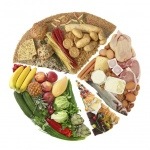
Clean eating, is eating foods in their most natural form. This means consuming foods such as fruits, vegetables, lean meats, healthy fats and complex carbohydrates. Clean eating is not a diet, but rather a lifestyle. It focuses on eating whole foods and limiting processed foods. This lifestyle can be for anyone looking to make healthier choices, get fit or improve their health. When you first start eating clean it can be a little overwhelming. Trying to figure out what is considered clean and what is not can be confusing. I suggest starting with changing your habits by taking small steps towards eating clean.

Here are some tips to get you started:

Avoid soda and sugary drinks. Opt for water instead and add lemon or melon for flavor.

Eat 5-6 small meals a day. Eating every 2-3 hours will prevent over eating, control blood sugar levels and boost your metabolism.

Read labels. Try not to purchase foods that have more than 5-6 ingredients. If the ingredient list is too long or you can’t pronounce any of it, it’s most likely over processed and unhealthy.

Prepare meals Ahead of time. Prepping your meals ahead of time will help you avoid temptation and hunger.

Avoid processed and refined foods. Most processed foods are high in fat, sugar, and salt.

Avoid sugar. Sugar spikes your insulin levels and has no nutritional value. Use honey or agave nectar.

Clean eating has many health benefits such as weight loss, increased energy and improved sleep habits. I hope these basic tips help you better understand the clean eating movement.

Please enjoy one of my kids favorite clean eating recipes…

Crunchy Oven Baked Chicken Tenders

20130511-102014.jpg

1⁄4 C. honey (I love orange blossom honey)
1⁄4 C. mustard (I use whole grain organic)
2 C. Panko bread crumbs
15 – 18 chicken tenders

Prep Directions – Label 9×13 deep pan or another deep type of container. Pour honey and mustard into shallow bowl and mix well. Pour Panko crumbs onto a plate. Dip each chicken tender in honey mustard then crumbs. Store in pan with lid. Use wax paper between layers. Freeze if you desire.

Serving Directions – Bake tenders on foil lined baking sheet in 375 degree oven for 25-30 minutes or until juices run clear. Add to 10-15 minutes if frozen.

Posted in Healthy Eating

Wellness Wednesdays: Urban Foraging and Wild Edibles

Urban Foraging and Wild Edibles

20130507-114601.jpg

Foraging for food is an aspect of the human condition but to most urban american dwellers it is a concept and a skill long lost to history in the industrial world. Many view foraging as a “primitive” way of living. But there is wide variety of edible plants, nuts, and fruit out there just waiting for us.

Edible wild food are available everywhere, including urban and suburban environments. Urban parks are one of the better places to begin urban foraging. Park grounds are rarely sprayed with pesticides or chemicals but if they have been signs are clearly marked to inform the users. You should avoid plant locations prone to hazardous contaminants such as industrial areas, busy roadsides, and pristinely manicured lawns with signs advertizing herbicides.

Again, city parks are generally a safe location for foraging with the added benefit that they contain a wide variety of edibles and many of these tend to be non-native species so any collection of these foods will not adversely affect the local environment or sensitive plant communities. One such example of a very common edible plant is the dandelion.

Urban trees can also be another great source of foraging potential. Shade trees along sidewalks or parking lots often have edible fruit; these include mulberry trees, black walnuts, crabapples, plumbs, and even apple trees.

If you happen to find a residential fruit tree overburdened with fruit don’t be afraid to ask permission from the owner to harvest; oftentimes these fruit trees are seen as a burden and many owners may be happy to have someone else harvest the fruit rather than clean the fallen fruit from the sidewalk.

The key to eating wild foods and urban foraging is proper identification; many plants have poisonous cousins so when starting out it is best to stick to those plants without lookalikes. It is always best to be sure of what you are eating and be confident in plant identification. Common urban edibles include morel mushrooms, choke cherries, sumac, raspberries, wild parsnips, watercress, clover, dandelion, blueberries, black walnut, wild grapes, wild onion, garlic mustard, blackberries, and hazelnuts.

Foraging can be a sustainable if practices responsibly.

Harvest only items that are in abundance; if only a few specimens of a particular edible are available move on to another patch and allow the small patch to grow and expand. Leave the biggest and healthiest of the species to continue to propagate.

When gathering greens from a plant, ensure enough of the leaves (75%) remain to keep it alive. Ensure that threatened and endangered species of plants are not harvested.

Foraging for wild food can be a fun if you have adventurous spirit.

Other great resources for foraging…

Wild Edibles

Neighborhood Fruit is here to help you find and share fruit locally: both backyard bounty and abundance on public lands.

Foraging Instructors

Here my wild plum jam recipe…my neighbors have a tree that they never do anything with, so we get to enjoy the spoils!

Wild Plum Jam

20130507-120119.jpg

4 pounds pitted wild plums
1⁄2 cup water
7 1⁄2 cups sugar
1 package liquid pectin

If you don’t want to pull large hunks of plum skin out of your jam, you can either finely chop the plums in the beginning or blitz the mix with a handheld immersion blender when they’re cooked.

In large, heavy-bottomed cooking pan, combine pitted plums and water.

Bring to boil; reduce heat and simmer for at least 5 minutes, stirring and crushing plums. Hit them with the immersion blender if you haven’t previously chopped them.

Add sugar and mix thoroughly.

Bring mixture to full boil over high heat, to the point where it cannot be stirred down.

Quickly add liquid pectin. Continue stirring and boiling hard for 1 minute. (Use the timer; don’t guess.)

Remove from heat and skim off foam, if necessary.

Fill sterilized and prepared canning jars, and process in water bath for 10 minutes (adjusting for altitude as necessary).

NOTE: This recipe produced 7 half-pint jars, with nearly a full extra pint that I just put in the refrigerator for our immediate use instead of processing in the water bath. The bonus jam is a good way to test it to make sure it’s perfect before giving it out as gifts!