Posted in - Pork, Breakfast

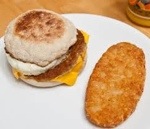
Frugal Fridays: Sausage McMuffins

To make Sausage McMuffins , I need only four ingredients: sausage, eggs, English muffins, and a mild yellow cheese.

20121111-002130.jpg

16 ounce tube of bulk sausage – $3.00, which yields six 2½-ounce patties – $0.50 each
6 pack English muffins -$3.49, or $0.58 per muffin
6 fresh eggs – Free (we have backyard laying hens) – optional
6 slices Land-O-Lakes yellow American cheese (taste like McDonald’s cheese) – $4.99 or $0.31 per 1 ounce slice

My total cost to make a sausage/muffin/egg breakfast sandwich would be $1.39 each.

Prep Day: Cook the sausage patties in a skillet. Toast each half of English muffin, then butter. Cool the patties and the muffins. Lay one sausage patty on top of half of a bun then top with cheese slice, top with remaining half of muffin.

To Freeze: Wrap each one individually in heavy plastic wrap and freeze until solid. Remove the frozen sandwiches from freezer and wrap each sandwich tightly in foil to prevent any freezer burn, then return to freezer until ready to use.

Serve Day: When ready to use; unwrap the sandwich from the foil and plastic wrap. Wrap in a paper towel and microwave on HIGH for about 50-60 seconds or until heated through.

Optional – Add on an egg (if using) before or after warming the sandwich.

Posted in - Red Meat, Healthy Eating

Wellness Wednesdays: The Beef You Love

Why Not Eat the Beef You Love?!

Most people consider turkey, chicken, and fish healthy, yet think they should avoid red meat—or only choose very lean cuts—since they’ve always been told that it’s high in saturated fat.

But there are two problems in that thinking. The first problem is that almost half of the fat in beef is a monounsaturated fat called oleic acid—the same heart-healthy fat that’s found in olive oil. Second, most of the saturated fat in beef actually decreases your heart-disease risk—either by lowering LDL (bad) cholesterol, or by reducing your ratio of total cholesterol to HDL (good) cholesterol.

And besides being one of the most available sources of high-quality protein, beef also provides many important nutrients such as iron, zinc, and B vitamins. So the idea that beef is bad for you couldn’t be further from the truth.

Resource: Men’s Health

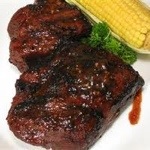
Barbecued Chuck Roast

20121027-124235.jpg

Makes 8 servings

Prep Day:

Trim fat from one 2-1/2 to 3 pound chuck roast, 1-1/2 to 2 inches thick. Place meat in freezer bag.

Mix:
1/3 cup wine vinegar
1/4 cup catsup
2 T. soy sauce
1 t. salt
2 t. Worcestershire sauce
1 t. prepared mustard
1/4 t. garlic powder
1/4 t. pepper

Pour over meat; close bag. Marinate 2 to 3 hours at room temperature or overnight in refrigerator. Turn bag occasionally to distribute marinade. Freeze.

Serving Day: Thaw meat and let set in marinade in refrigerator. Remove meat, reserve marinade. Place meat on rack of broiler pan. Broil 6 to 8 inches from heat till medium rare, about 50 to 60 minutes. Turn meat every 10 minutes. If meat is not seeming to get down in the middle, cut the roast in 2 to let heat get to the middle. Baste with reserved marinade the last 20 to 30 minutes (I usually baste at least 2 times on each side.)

It may be serve with baked potatoes, vegetable and good bread. Heat up reserved marinade and serve in a side dish for people who wish more barbecue sauce.

This is one of my all time favorite recipes!

Posted in - Poultry, Healthy Eating

Wellness Wednesdays: The Pasta You Love

Why Not Eat The Pasta You Love?!

20121108-165845.jpg

Foods from this starch food group are a good source of energy, fiber and B vitamins. We should aim to make these foods the main part of meals. Bread, rice, potatoes, pasta and other starchy foods like cereals are low in fat. It is what we add to them, such as butter on potatoes or creamy sauces on pasta, that makes a difference.

Fiber is helpful in controlling our weight because it fills us up quickly, but it has other health benefits too, such as preventing constipation, protecting us against some types of cancer and reducing our risk of heart disease.

Wholegrain varieties of bread, rice and pasta contain lots of fibre so try to include granary or multigrain breads and high fibre cereals such as Weetabix, Shredded Wheat or Ready Brek into your diet. Make a point of eating the skin on new potatoes and baked potatoes, and why not try brown rice or pasta for a change.

Remember, fiber is like a sponge and soaks up water so make sure you drink plenty of fluids throughout the day (8-10 cups/glasses) to allow it to pass through the body easily and to help keep you regular.

B vitamins are important for a range of different functions including the formation of red blood cells and helping the body to use fat, carbohydrate and protein from our food. Folate is an important B vitamin found in dark green, leafy vegetables such as cabbage, spinach, Brussels sprouts as well as fortified breakfast cereals.

Any woman who is trying to conceive or who could become pregnant should take a 400µg folic acid supplement from the time she could or is trying to become pregnant up until the end of the12th week of pregnancy. Folic acid has been shown to help prevent neural tube defects (NTDs) such as spina bifida in unborn babies. Any folic acid that is not needed by the body passes into the urine, so it is safe to continue to use folic acid supplements for long periods of time.

Resource: Public Health Agency

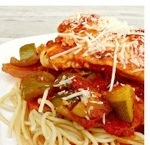
Chicken Cacciatore
20121108-165644.jpg

1 lb chicken breasts
1 (26 oz) jar of chunky vegetable-style spaghetti sauce
1 zucchini, chopped
1 green pepper, chopped
1 sweet onion, chopped

Prep Day: Place all ingredients in a resealable gallon-sized freezer bag and mix together. Freeze.

Serve Day: When ready to eat, remove from freezer and thaw in fridge for 24 hours. Cook on LOW for 6-8 hours.

Serve with cooked spaghetti noodles and garnish with olives and cheese. Also would be delicious with Cheesy Garlic Sticks.

Garnish: chopped black olives, shredded Parm cheese