Posted in Healthy Eating

Wellness Wednesdays: How to Read Nutrition Food Labels

How to Read Nutrition Food Labels

Understanding food labels can help you make wise choice, if you know what to look for. Here’s a rundown of the most important elements.
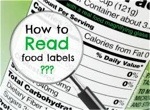
20130516-132747.jpg

Serving Size – This number is at the top for a reason: The nutritional information on the rest of the label applies to one serving. The FDA sets serving sizes for all foods―they are measurements, not recommendations. Total calories are calculated per serving, as are total calories from fat, so be sure to look at the servings per container. A bag of potato chips might say it has 150 calories per serving, but the entire bag might be three servings, or 450 calories.

Percent of Daily Value – This is calculated for a moderately active woman, or a fairly sedentary man, who eats 2,000 calories a day. (Highly active women, moderately active men, and growing teen boys may need closer to 2,500 calories a day.) A serving of Cheerios with ½ cup of skim milk gives the average adult just 3 percent of the daily value of fat intake and 11 percent of the daily value of fiber intake recommended by the U.S. Department of Agriculture (USDA).

Fat – More important than total fat are the numbers for saturated, polyunsaturated, monounsaturated, and trans fats. You want to see that the food contains relatively little saturated fat and trans fat, and relatively more polyunsaturated and monounsaturated. Keep in mind that “fat-free” doesn’t equal “calorie-free.” Many fat-free and low-fat foods have added sugar.

Cholesterol -This is a fat like chemical that’s an essential component of cell membranes, a covering for nerve-cell fibers, and a building block of hormones. Only animal products contain cholesterol. Adults are advised to limit their daily intake to 300 milligrams. Too much can elevate your blood cholesterol, raising your heart-disease risk.

Sodium – The recommended daily limit for an average adult is 2,300 milligrams; too much sodium can cause high blood pressure. By the USDA’s reckoning, a food is low in sodium if it contains no more than 140 milligrams. (A serving of Cheerios has 210 milligrams and is therefore not low in sodium.) A single serving of soup or a frozen dinner may contain 1,000 milligrams or more of sodium, which is nearly half the daily limit.

Potassium – Getting enough of this mineral―4,700 milligrams a day for adults―may help prevent high blood pressure. Low potassium can lead to an irregular heartbeat.

Total Carbohydrate This large category includes everything from whole grains (healthy carbs) to sugar and other refined carbs (unhealthy ones). It’s most helpful to look at the sugar and fiber numbers.

Dietary Fiber – The average adult should eat between 21 and 35 grams of fiber daily, but most don’t reach that level. When buying bread or cereal, look for a brand with 3 grams or more per serving. Some labels describe whether the fiber is soluble or insoluble. Both are important. Soluble fiber, found in oatmeal, barley, and dried beans, can help lower cholesterol levels. Insoluble fiber, found in whole grains and fruit and vegetable skins, protects against bowel disorders and may help digestion.

Sugars – These simple carbohydrates include glucose, dextrose, fructose, and galactose, all of which provide little nutritional value. Sugar shows up in surprising places, like crackers, “healthy” cereals, and salad dressings. It’s often added to foods that need a flavor boost (like low-fat products).

Protein – In general, .45 gram of protein daily per pound of body weight (that’s 68 grams for a 150-pound person) is plenty of protein, even if you’re breast-feeding or physically active. Most Americans get enough protein effortlessly (unless they’re vegetarians). And it’s rare for people eating a normal diet to get too much.

Vitamins and Minerals – This list includes the vitamins and minerals found in the food naturally, along with any added to it, and the percentage of daily value for each―again, calculated for a 2,000-calorie-a-day diet. The footnote (not found on all nutrition labels) provides a table listing the total daily grams of fat, cholesterol, sodium, potassium, carbohydrates, and fiber that the USDA recommends in a 2,000- or 2,500-calorie diet.

Ingredients – The product’s ingredients must be listed in order of quantity, so the major ones come first. When checking a label on bread, for instance, you want to see that the first ingredient is whole wheat, oats, or some other grain. (Note that “whole wheat” means “whole grain,” but not all brown-colored and “multigrain” breads are made of whole grain.)

Supplemental Vitamins and Minerals – Listed below the ingredients are supplemental nutrients that the manufacturer has added to the food.

Exchange – This information, listed voluntarily by the manufacturer, is for people with diabetes. The food-exchange system categorizes foods into food groups. A nutritionist may counsel a diabetic person to eat eight exchanges of starch per day, for example. A bowl of Cheerios would take up 1½ of those exchanges in a 1,600- to 2,000-calorie-a-day diet.
Posted in Tips and Tricks

Tips and Tricks Tuesdays: What’s in My Fridge, Freezer, and Pantry?

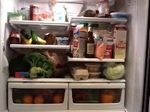
20130509-155242.jpg

According to a recent survey, twenty-eight percent of Americans can’t cook. In fact, mageirocophobia, fear of cooking, is a real condition! While some worry about serving inedible food, others are afraid of complicated recipes, poor presentation, or cooking for large groups. So, today I’m going back to basics to help cooking newcomers tackle their kitchen fears.

Before acing the cooking process, they’ll first need to know the basics of food storage. So, here’s a cheat sheet for what to keep in your fridge, freezer, and pantry.

Fridge Essentials

1. Eggs (Love my backyard chickens! When we have too many eggs I freeze them too.)
2. Parmigiano-Reggiano: Store in the dairy drawer.
3. Meats: Store on the bottom shelf in case juices drip.
4. Organic Milk: Store in the coldest part of your fridge.
5. Produce: Wash, Prep, and Store. Nothing is better than going to the fridge and having your veggies ready to cook. (Gardening seasoned just started here in Minnesota cannot wait till harvest time. Till then I will have to enjoy local farmers markets.)
6. Condiments: Mayonnaise, Ketchup, Aldi’s Pure Maple Syrup (cannot beat their price), etc.

Freezer Essentials

1. Papa Pita Whole Wheat Greek Pita Flat Bread or Naan Bread
2. Chicken Breasts: Wrap pieces individually so you can defrost one at a time.
3. Veggies and Fruits
4. Cookie Dough
5. Soups and Sauces: Store in individual portions for easy defrosting.

Pantry Staples

1. Dried Fruits and Nuts
2. Oil and Vinegar
3. Dried Pasta
4. Spices
5. Canned Goods
6. Perishable Goods (Potatoes, Onions, Garlic)

Posted in - 2013 Swap Recipes, Meal Swap Recipes

Meal Swap: Friday’s Group May 2013 Menu and Recipes

May 2013 Menu and Recipes:

Seafood/Fish –

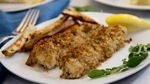
Oven Baked Fish Sticks (Ann)

20130422-215849.jpg

Serving Size: 8

3 cups panko bread crumbs
1/3 cup olive oil
1 tablespoon seafood seasoning (such as Old Bay)
kosher salt
3 large eggs
2 1/2 pounds skinless tilapia fillets, cut into 1-inch strips
coleslaw and ketchup, for serving (you supply)

Prep Day Directions: Heat oven to 450° F. On a large rimmed baking sheet, toss the bread crumbs with the oil, seafood seasoning, and ½ teaspoon salt. Toast in oven, tossing once, until golden brown, 5 to 7 minutes. Transfer to a shallow bowl and wipe out the baking sheet. In a second shallow bowl, beat the eggs with 1 tablespoon water. Working with a few pieces at a time, dip the fish in the beaten eggs (shaking off any excess), then coat with the bread crumbs (pressing gently to help them adhere). Place in a single layer on 2 large parchment-lined large baking sheets. The uncooked fish sticks can be frozen for up to 3 months. First freeze them on the baking sheets until firm, then transfer to freezer bags.

Serve Day Directions: To cook, bake at 425 or 450 from frozen on parchment-lined baking sheets until crisp and opaque throughout, 18 to 20 minutes.

Poultry –

Crunchy Oven Baked Chicken Tenders (Lindsey M.)

20130422-220314.jpg

1⁄4 C. honey
1⁄4 C. mustard
2 C. whole wheat bread crumbs
15 – 18 chicken tenders

Prep Directions: Label large storage container. Pour honey and mustard into shallow bowl and mix well. Pour Panko crumbs onto a paper plate. Dip each chicken tender in honey mustard then crumbs. Store in large container with lid. Use wax paper between layers. Freeze if you desire.

Serving Directions: Bake tenders on foil lined baking sheet in 375 degree oven for 25-30 minutes or until juices run clear. Add to 10-15 minutes if frozen. Cook potatoes and peas according to package directions.

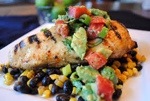
Cilantro Lime Chicken with Corn and Black Beans (Gretchen)

20130422-220636.jpg

1 1/2 lbs boneless skinless chicken breast
Juice from 2 limes (2 tbsp)
1 cup or 1 bunch fresh cilantro, chopped
3 cups frozen corn
2 garlic cloves, minced
1 cup red onion, chopped
1-2 cans black beans, drained and rinsed
1 tsp cumin

Prep Day Directions: Mix all ingredients in gallon-sized bag. Freeze.

Serve Day Directions: Thaw completely. Cook in slow cooker on low for 8 hours or high for 4 hours. Enjoy with cheese or guacamole if desired.

Beef –

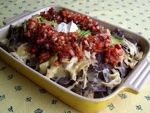
Baked Dinner Nachos (Vanessa)

20130422-221101.jpg

1 bag of your favorite blue tortilla chips
1 pound ground chuck or ground turkey
1/4 cup of salsa
1 – 8 ounce Monterey Jack cheese, shredded
1 can of refried beans, heated until very hot!
a pinch of salt
a pinch of pepper

You Provide (If You Want):
1 small tomato, seeded and diced
3 green onions, sliced
Shredded lettuce
Sour cream
sliced black olives
white or red onions
jalapeno rings
guacamole
cilantro, chopped
fresh lime juice or your favorite hot sauce

Prep Day: Put salsa, salt & pepper, and ground beef in a quart size freezer bag. Place cheese bag and meat mixture bag in a gallon bag. Freeze.

Serve Day: Place the ground chuck mix in a preheated pan over medium heat, cook through. Turn down the heat to low to keep warm. While the ground chuck is cooking start to heat refried beans over medium-low heat until bubbly. Place half of the chips on a foil lined baking sheet and cover with a third of the cheese. Put your broiler on high. Place under the broiler for 3-4 minutes until the cheese is melted and bubbly. Next spread the hot beans over the chips and cheese and add the rest of the chips forming a single layer again. Top with the ground beef and then with the remaining cheese. Place under the broiler for 5 minutes or until cheese is melted. Lastly top with your favorite toppings and serve! Enjoy!

If you want some of your toppings baked in the nacho, add them on top of the second layer of cheese before placing them under the broiler! Or put toppings on individually.

Meatless or Your Choice –

Hearty Black Bean Quesadillas (Keri)

20130422-221422.jpg

1 can black beans
1 cup frozen corn kernels
1/2 small red onion
1 clove garlic
1/4 bunch fresh cilantro
2 cups shredded cheese
1 batch taco seasoning (1 tbsp chili powder, 1 tsp smoked paprika, 1 tsp cumin)
1/4 tsp cayenne pepper
1/2 tsp oregano
1/2 tsp salt
1/2 tsp fresh black pepper
1/2 tsp cornstarch) tortillas

Prep Day Directions: Drain can of beans and rinse slightly. Place beans in large bowl with frozen corn (no need to thaw). Chop cilantro roughly; dice onion; mince garlic. Add cilantro, onion, garlic, and shredded cheese to the bowl with the beans and corn. Mix up batch of taco seasoning and add to bowl. Stir everything until evenly mixed. Place half cup of filling on one side of each tortilla and fold over. Wrap tortillas in aluminum foil, place in gallon-size freezer bag and freeze.

Serve Day Directions: Reheat from frozen. You can microwave them for a softer quesadilla, or cook in a skillet/griddle on low heat (make sure to use low heat, so the filling has time to thaw and melt before outside burns!).

Pork –

Cheesy Ham and Potato Soup (Heather G.)

20130422-221635.jpg

Serving Size: 1-2 cups

2 cups Diced ham
1 onion diced
1/2 cup small diced carrot and celery
5 cups diced potatoes
Garlic clove minced
2 cups veggie stock and water
1 cup 1/2&1/2
1cup grated sharp cheddar

Prep Day Directions: Sauté veggies. Add ham let it cook. Add potatoes stock and cook and season. Once potatoes are soft add cream and cheese.

Serve Day Directions: Thaw. Heat and eat.

French Market Sandwiches (Megan)

20130422-221856.jpg

12 plain buns (my favorite is croissants)
1 cup butter, room temp
1/4 cup prepared mustard
1/2 teaspoon poppy seed
2 tablespoons finely minced shallots
2 lbs shaved ham
12 slices Swiss cheese

Prep Day Directions: Slice croissants in half horizontally. Mix butter, mustard, poppy seeds and onion together. Spread on half of each croissant. Top with 2 1/2 slices of ham and a slice of cheese. Put halves together. Wrap each sandwich in foil to be frozen or made fresh. To make from fresh warm wrapped sandwich in 350 F oven for 15 minutes.

Serve Day Directions: No need to thaw. Unwrap and put on cookie sheet. Bake at 325F for 25 to 30 minutes or till cheese is melted.

Note to Swappers: We have two new swappers joining us this summer. Once I have their recipes I will post the June menu vote!