Posted in Meal Swap Recipes

Wellness Wednesday: Knives Over Forks Cookbook Review

Knives Over Forks Cookbook Review

20130406-011056.jpg

The follow up to the best selling Forks over Knives book, which is the companion book to the awesome documentary Forks over Knives. Recommended viewing and reading for sure.

The book has a nice substantial introductory section, which very briefly recaps a lot of the issues brought up in the film and companion book, then looks at preparation and cooking techniques, stocking the pantry, tools and the like. Worth taking the time to read.

The recipes are well laid out – with mostly one to a page (excepting smaller ones, or those that go together), are mostly logically grouped into chapters (there are some noodle salads in the noodle section not the salad section where you might expect to see them, but things like that do fit into either category), and the recipe are interspersed with colour photo inserts. There is a dessert chapter, which you may not have been expecting in a no-fat, healthy whole food cookbook, bonus!

In reading the Amazon reviews for this cookbook I see there were issues with errors in some of the recipes. I must have a later print run as I came across no typos or errors in mine, so it looks like that is a problem solved – everyone can enjoy the book now with peace of mind that everything is good to go!

Enjoy this recipe adapted from the Knives Over Forks Website…

Chipotle Corn Salsa and Baked Tortilla Chips

20130406-010103.jpg

1 – one pound bag of frozen corn, defrosted
2 – 15 ounce cans of Pinto beans, drained and rinsed
One pound of Roma Tomatoes (approximately 4), seeded and diced
One bunch of Cilantro, chopped
4 scallions (or more, to taste) finely chopped
1 tbsp Chipotle Paste (or ¼ teaspoon chipotle powder) or more to taste
Juice and zest from 4 limes

Prep Day: Mix all ingredients together in a large bowl. Flavors will improve on sitting. Stir well before placing in freezer storage containers.

Serve Day: Thaw when needed.

To Make Baked Tortilla Chips:

Make sure you get tortillas that are made only of corn or just corn and lime.

Corn tortillas

Prep Day: Freeze tortillas.

Serve Day: Thaw tortillas. Preheat oven to 375F. Cut each tortilla into fourths. Place on a cookie sheet covered with a non-stick Silicone Baking mat or parchment paper and lightly spray each chip with water. Sprinkle with herbs or salt-free seasonings, if desired. Bake for 10 minutes. Turn chips over and lightly spray again with water. Bake another 8-10 minutes until crisp.

Chef’s Note: You can also do this with whole-wheat pita, but it would not be gluten-free.

Posted in Tips and Tricks

Tips and Tricks Tuesdays: Another List of Freezer Do’s and Don’ts

Freezer Do’s and Don’ts

20130406-003118.jpg

I’ve learned these details mainly through trial and error what foods do and do not freeze well particularly for make ahead meals. Hopefully this list will help you to create your own freezable recipes or help you decide whether or not you think you should freeze some recipes or just store them in the refrigerator.

Foods That Can Freeze

Meat, poultry and fish all can be frozen. Raw meat is preferable for long storage because it doesn’t dry out or get freezer burn as fast as cooked meat. Wrapping your meat in plastic wrap before putting it in a freezer zipper bag prevents air in the bag from getting to the meat, therefore, no more freezer burned meats!

Breads and baked goods do well in the freezer. This includes cakes, pies, muffins, bagels, quick and yeast breads both as dough/batter or baked, cookies raw or baked and pizza crusts raw or baked. I try to have rolls and an extra loaf of bread in the freezer so we always have bread on hand!

Butter and margarine freeze great.

Beans freeze well and can save you a ton of money if you buy dry beans then soak and cook them yourself instead of buying the canned variety.

Rice can also freeze and cooking it ahead can save a ton of time.

Foods That Can Freeze But Will Change In Texture – (Most foods fall into this category)

Fruits and vegetables all soften and those with high water content do not freeze well. Most fruits and veggies should be used for cooking or baking after being frozen. Fruits and veggies do need some prep work as well. I freeze veggies a lot, but I avoid cooked veggies. I store them separately in freezer bags with all the air sucked out.

Potatoes freeze great and make quick side dishes, however they must be cooked before freezing to insure they don’t turn black. Now I haven’t had this problem with uncooked potatoes, so I think if you’re planning on eating them within a month, you’ll be ok.

Pastas will become very soft after they are frozen and should only be cooked about three quarters of the recommended time. Also pastas frozen in liquid or sauce will absorb much of the sauce.

Milk and dairy products can be frozen but may separate after being frozen. Cheese will become crumbly and hard to slice but is fine for cooking or melting. If the recipe calls for shredded cheese, I usually add that at cooking time.

Herbs lose their texture but retain their flavor. Frozen herbs can be used for cooked dishes but not for garnishes.

Raw eggs removed from their shells can be frozen but need to be mixed with a bit of salt or sugar to keep them from turning rubbery.

Cooked eggs that are scrambled or used in a recipe freeze well. Boiled eggs don’t do as well because the whites get rubbery.

Fried foods lose their crispness but do alright when reheated in the oven.

Salty fatty items, such as bacon, sausage, ham, hot dogs, some lunch meats and some fish do not last long in the freezer. The USDA only recommends freezing these items for 1-3 months. The salt causes fat to go rancid in the freezer. Many people freeze these items longer so use your best judgment. If it looks or smells ‘off’ toss it.

Foods That Can’t Freeze

Cornstarch looses it’s thickening power. Use a rue made of butter and flour (or rice flour if you’re gluten free) instead.

Gelatin weeps, or loses water.

Vegetables such as lettuces, celery, radishes and cucumbers become a watery mess.

Melons get very soft and lose much of their juice. They can still be used for smoothies but generally are not frozen.

Meringue toppings become tough and rubbery.

Custards and cream puddings can separate.

Mayonnaise tends to separate. Except for Miracle Whip. The only mayo that can be frozen.

Crumb toppings for things like casseroles or desserts can become soggy. You can always store the topping in a separate baggy and add to the top when cooking.

Egg white based icing or frosting can become frothy or weep.

Effect of Freezing on Spices and Seasonings

Pepper, cloves, garlic, green pepper, imitation vanilla and some herbs tend to get strong and sometimes bitter.

Onion and paprika change flavor during freezing.

Celery seasonings become stronger.

Curry develops a musty off-flavor.

Salt loses flavor and has the tendency to increase rancidity of any item containing fat.

When using seasonings and spices, season lightly before freezing, and add additional seasonings when reheating or serving.

Posted in - Poultry, - Seafood/Fish, Meal Planning

Meal Planning Mondays: Recipes to Try for the Week of 4/8 – 4/14/13

20130222-113630.jpg

Meal Planning Mondays are an experiment to see what works for my family. I like trying new recipes. I have too many copycat Minneapolis/St. Paul restaurant recipes that are not being utilized. This week I committ to making these recipes… Bachelor Farmer’s Gravlax and Hell’ Kitchen Chicken. These recipes will continue to be made ahead time and frozen.

Bachelor Farmer’s Gravlax

1 (3lbs.) small salmon, filleted, deboned
2/5 cup sugar
3/5 cup kosher salt
2 bunches of dill, roughly chopped

Mix the salt and sugar. In a metal, glass, or enameled container that is long enough to hold a side of salmon, sprinkle 1/3 of the salt and sugar and 1/3 of the dill.

Place one half of the salmon, skin side down, on the bed of dill and seasonings. Sprinkle 1/3 of the dill over the salmon, then another 1/3 of the salt and sugar mixture, applying it more liberally in the thicker part of the fish.

Place the other half of the salmon, skin side up, directly on top of the first half. Sprinkle the remaining 1/3 of dill and 1/3 of the salt and sugar mixture onto the top salmon filet.

Cover with plastic. Rest another container of the same length directly on the top salmon fillet. Weigh with two cans of beans or tomatoes and refrigerate.

Flip the fish upside down, every 12 hours for 48 hours. The gravlax is ready at that time. Thinly slice the salmon, leaving the skin behind.

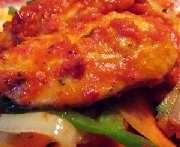
Hell’s Kitchen Chicken

20130403-142926.jpg

Serves 4

1 1/2 Pounds Chicken Breasts
3 Tablespoons Cajun Seasoning
3 Tablespoons Red Pepper Flakes
1/2 Cup All Purpose Flour
2 Tablespoons Extra Virgin Olive Oil
1 Can Diced Tomatoes
1/2 Cup Green Pepper, sliced
1/2 Cup Red Pepper, sliced
1/4 Cup Onion, chopped
4 Garlic Cloves, chopped
1 Handful Mushrooms
1 Package Spaghetti
1 Sprinkling Parmesan Cheese

Prep Day: Pound chicken until 1/2 – 3/4 inch thick. Wrap for freezing. Mix cajun seasoning, red pepper flakes and all purpose flour. Place in a zipper bag for the pantry. Place chopped onions and garlic in a freezer bag. Place in another freezer bag peppers. Place chicken, peppers, and onions/garlic mix bags in a 1 gallon freezer bag. And freeze.

Preheat large frying pan with Olive Oil.

Dredge chicken breasts in seasoning mixture insuring an even coating. Brown chicken breasts 4-5 minutes both sides. Remove chicken breasts.

Put a pot of water on to boil for the pasta. Add Onion and garlic and saute for 3-4 minutes or until lightly browned. Add green and red pepper saute for an additional 3-4 minutes.

Return chicken, add tomato, and mushrooms allow to simmer for 8-10 minutes. Add pasta to water. Drain the pasta when ready, and serve with the chicken on top. Sprinkle some parmesan cheese on for extra flavor!